Unicore · Freight solutions
Sea Freight Services
Reliable FCL & LCL Container Shipping Worldwide
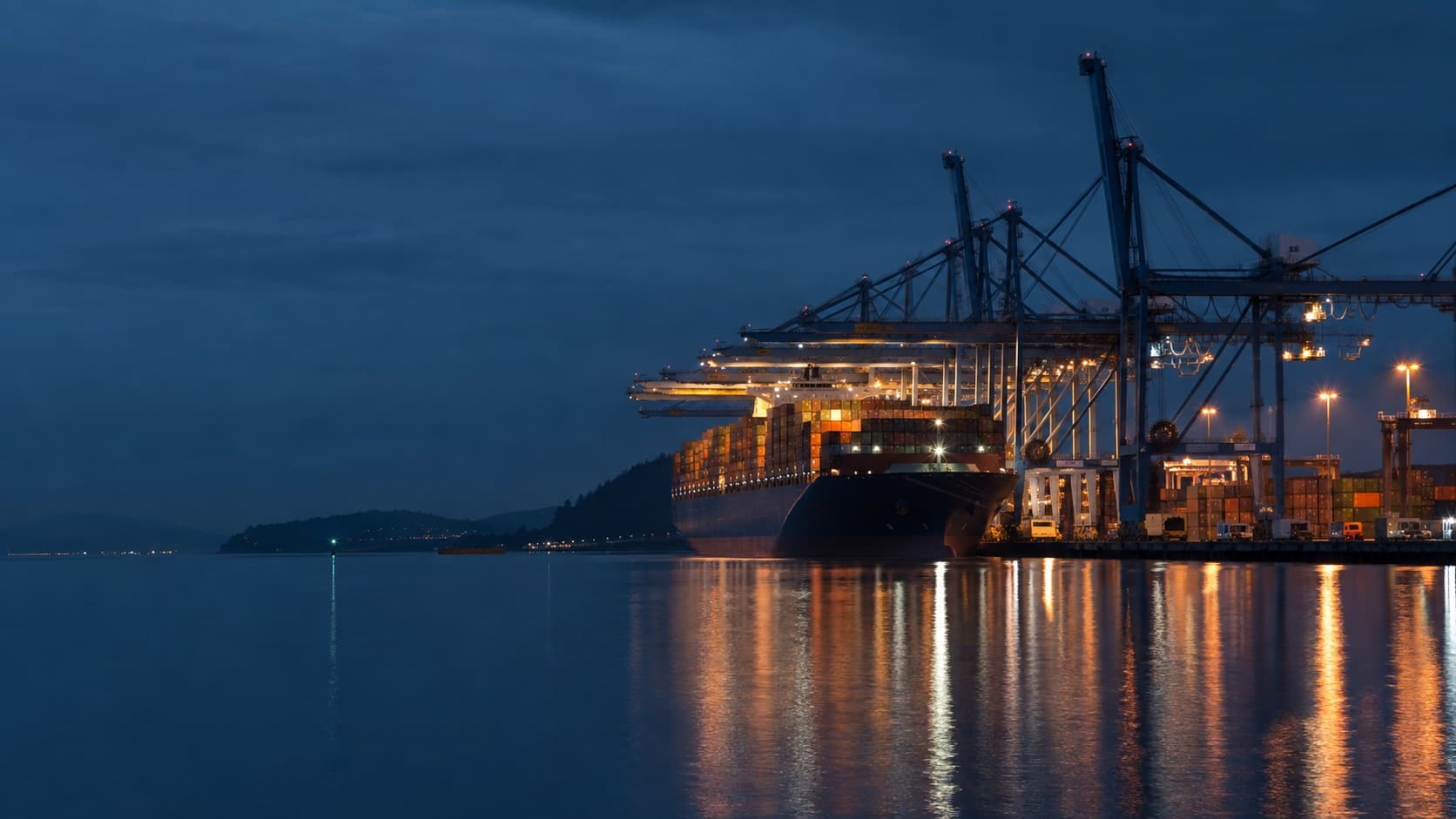
FCL container imports and exports in the Baltics
Plan full-container shipping to or from Latvia, Lithuania and Estonia. Share the collection and delivery addresses so we can assess port and inland delivery options, including Riga and Klaipeda.
Include the commodity, container type and quantity, cargo weight, ready date and Incoterms. For recurring shipments, add your estimated containers per month and any customs or delivery requirements.
Unicore Overseas SIA arranges sea freight and container shipping through the Port of Riga: full containers (FCL) and LCL groupage from China, Asia and the USA, and exports from Latvia. Sea freight is the most economical way to ship large volumes internationally, and Unicore books space with Maersk, MSC and CMA CGM, choosing the line for each shipment by schedule and routing.
Whether you need a full container (FCL) for large shipments or shared container space (LCL) for smaller volumes, we manage every aspect of your sea freight from booking to final delivery — including documentation, customs clearance, cargo insurance, and last-mile delivery.
Unicore at a glance
Unicore Overseas SIA is an international freight forwarder in Riga, Latvia, founded in 2005. It is an IATA accredited agent (CASS) and IATA DGR certified for dangerous goods classes 1 to 9, and it clears customs with its own licensed brokers.
- Founded
- 2005
- IATA dual certification
- IATA accredited agent (CASS) and IATA DGR certified
- Dangerous goods classes handled
- IATA DGR classes 1 to 9
- In-house customs clearance
- Yes — licensed customs brokers in-house, no separate broker required
- Shipments handled
- 632
- Sea freight shipments
- 305
- Containers moved
- 802
- Sea ports shipped through
- 72
Operating figures (shipments, containers, tonnage, ports) cover the 12 months to 11 September 2026; source: Unicore's shipment system. All Unicore company facts
Key Features


How Our Sea Freight Process Works
Request Quote - Contact us with your cargo details. We respond within 1 hour with routing options and competitive rates.
Route Planning - We analyze the best carriers, routes, and transit times based on your timeline and budget requirements.
Documentation - Our team handles all export documentation, bills of lading, and customs paperwork for smooth processing.
Booking & Loading - We book with our partner shipping lines and coordinate container pickup or loading at origin.
Tracking & Updates - Receive real-time container tracking and regular status updates throughout the ocean voyage.
Delivery & Customs - We manage destination customs clearance and final delivery to your specified location.
Incoterms & Liability Terms
Understanding who bears responsibility at each stage of the shipment is crucial. We support all Incoterms 2020 rules and help you choose the right term based on your needs:
EXW (Ex Works)
Buyer takes responsibility from seller's premises. Lowest seller responsibility.
FOB (Free On Board)
Seller delivers cargo on board vessel. Risk transfers when cargo crosses ship's rail. Most common for sea freight.
CIF (Cost, Insurance, Freight)
Seller pays freight and insurance to destination port. Risk still transfers at origin port.
DDP (Delivered Duty Paid)
Seller bears all costs and risks to final destination, including customs and duties. Maximum seller responsibility.
CFR (Cost and Freight)
Seller pays freight to destination port. Buyer arranges insurance. Risk transfers at origin.
DAP (Delivered at Place)
Seller delivers to named place at destination. Buyer handles import customs and duties.
For detailed guidance on all 11 Incoterms and how to choose the right one, see our comprehensive Incoterms 2020 Guide →
Container Types Available
We offer the full range of container types to match your cargo requirements. Your Unicore logistics specialist will help select the optimal container type based on your cargo dimensions, weight, and special requirements.
Standard Containers
20ft Standard (TEU)
Internal: 5.9m × 2.35m × 2.39m | Volume: 33 CBM | Max payload: 28,200 kg
Ideal for: Heavy cargo, machinery, dense goods
40ft Standard (FEU)
Internal: 12.0m × 2.35m × 2.39m | Volume: 67 CBM | Max payload: 26,680 kg
Ideal for: Large volume shipments, general cargo
40ft High Cube
Internal: 12.0m × 2.35m × 2.69m | Volume: 76 CBM | Max payload: 26,460 kg
Ideal for: Lightweight, voluminous cargo, tall items
Specialized Containers
Reefer (Refrigerated)
Temperature-controlled from -30°C to +30°C. Available in 20ft and 40ft. Essential for perishables, pharmaceuticals, wine, and temperature-sensitive goods.
Flat Rack Container
Collapsible sides for oversized cargo. Ideal for heavy machinery, vehicles, construction equipment, and out-of-gauge cargo.
Open Top Container
Removable roof with tarpaulin cover. For tall cargo that cannot be loaded through doors — machinery, timber, heavy equipment.
Tank Container
For liquid bulk cargo — chemicals, food-grade liquids, hazardous liquids. Capacity: 21,000-26,000 liters.
For detailed specifications and selection guidance, see our Sea Container Guide → | Choosing the Right Container Guide →
Cargo Types Accepted & Restrictions
We handle a wide variety of cargo by sea. Here's what we can ship and any special conditions:
Accepted Cargo
- General Cargo - Consumer goods, electronics, textiles, furniture, industrial supplies
- Heavy Cargo - Machinery, equipment, vehicles, industrial components (up to 28 tonnes per container)
- Oversized Cargo - Items exceeding standard dimensions using flat racks, open tops, or breakbulk
- Perishable Goods - Food products, beverages, flowers using reefer containers
- Fragile Items - Glassware, ceramics, artwork with proper packaging and handling
- High-Value Cargo - Electronics, machinery, luxury goods with enhanced security measures
Special Conditions Cargo
Hazardous Materials (IMO/IMDG)
We ship dangerous goods under IMDG Code regulations. Requires: proper UN-approved packaging, MSDS documentation, Dangerous Goods Declaration (DGD), segregation compliance. All 9 hazard classes accepted with appropriate containers.
Temperature-Sensitive Cargo
Reefer containers maintain precise temperatures from -30°C to +30°C. Continuous monitoring throughout voyage. For pharmaceuticals, wine, food, and chemicals.
Restricted/Prohibited Items
We cannot ship: narcotics, weapons/ammunition (without license), counterfeit goods, live animals (without permits), certain explosives. Contact us to verify if your cargo can be accepted.
For detailed information on dangerous goods classification and requirements, see our Dangerous Goods Guide →
Documentation Requirements
Proper documentation is essential for smooth customs clearance. Here's a clear breakdown of responsibilities:
Documents We Handle (Unicore)
- Bill of Lading (B/L) - The contract of carriage and receipt for goods
- Export Customs Declaration - Filed at origin country customs
- Import Customs Declaration - Filed at destination country customs
- Sea Waybill - Non-negotiable alternative to B/L when appropriate
- Cargo Manifest - Complete list of all cargo in the container
- Arrival Notice - Notification when vessel arrives at destination port
- Dangerous Goods Declaration (DGD) - For hazmat shipments (we prepare with shipper info)
Documents Customer Provides
- Commercial Invoice - Description, quantity, value, buyer/seller details
- Packing List - Detailed list of items, weights, dimensions per package
- Certificate of Origin - If required by destination country or for preferential duty rates
- MSDS/SDS - Material Safety Data Sheet for chemicals and dangerous goods
- Export License - If required for controlled goods
- Letter of Credit - If payment terms require it
- Phytosanitary Certificate - For plant/wood products
- Health Certificate - For food products if required
For detailed guidance on customs documentation, see our Import Documentation Guide →
Complete Cost Breakdown
Transparency is core to how we work. Here's a detailed breakdown of all potential costs in sea freight:
Freight Charges
Origin Charges
Destination Charges
Additional/Potential Charges
Every quote from Unicore clearly itemizes all charges. No hidden fees — if a charge applies, we explain it upfront.
For detailed pricing guidance for routes to Europe, see our Sea Freight Costs Guide →
Typical Transit Times & Delay Factors
Unicore's typical port-to-port transit times on its main ocean lanes:
| Lane | Typical transit, port to port |
|---|---|
| China (Shanghai, Ningbo, Shenzhen) → Riga | FCL 38–48 days; LCL 45–55 days |
| Singapore ↔ Riga | 33–43 days |
| South-East Asia ↔ Riga | 33–48 days |
| Other Asian ports (overall range for Asia) ↔ Riga | 33–52 days |
| Riga ↔ USA East Coast | FCL 20–30 days; LCL 25–35 days |
| Riga ↔ USA West Coast | 35–45 days |
| South America ↔ Riga | 35–65 days |
These are typical port-to-port times, not promises. Unicore quotes the transit from the carrier schedule for your sailing and sends a new ETA if a sailing changes. Add 2-5 days for origin handling and 2-7 days for destination customs and delivery. For lanes within Europe, ask us for the current schedule.
What Can Cause Delays
- •Port Congestion - During peak seasons or at busy ports, vessels may wait for berths
- •Weather & Sea Conditions - Storms, rough seas can delay departures and slow transit
- •Customs Holds - Incomplete documentation or random inspections can delay clearance
- •Transshipment - Cargo changing vessels at hub ports adds time and delay risk
- •Geopolitical Events - Route disruptions (e.g., Suez Canal, Red Sea diversions)
- •Equipment Shortages - Container availability issues at certain ports
- •Blank Sailings - Carriers sometimes cancel sailings during low demand periods
We provide proactive updates and immediately notify you of any delays, along with revised ETAs and alternative options where available.
Booking & Lead Time Requirements
Proper planning ensures smooth shipment execution. Here's what you need to know about booking timelines:
Recommended Advance Booking
Key Cut-off Dates
Your Unicore coordinator will provide specific cut-off dates for each booking and send reminders to ensure you meet all deadlines.
LCL Consolidation: How It Works
Less than Container Load (LCL) allows you to ship smaller volumes by sharing container space with other shippers. Here's how the process works:
Collection - Your cargo is picked up and delivered to our consolidation warehouse
Consolidation - Cargo from multiple shippers is grouped into one container based on destination
Documentation - Each shipper receives their own House Bill of Lading; we create a Master B/L
Transit - Container ships as a single FCL unit
Deconsolidation - At destination, container is unpacked at warehouse
Delivery - Each shipper's cargo is released separately after customs clearance
LCL Considerations
- Transit Time - Add 5-10 days vs FCL for consolidation/deconsolidation handling
- Minimum Charge - Usually 1 CBM or 1000 kg minimum
- Handling Risk - More handling means slightly higher damage risk vs FCL
- Scheduling - Consolidation happens on fixed schedules (weekly from major ports)
- Cost Efficiency - Best for cargo between 1-15 CBM. Above 15 CBM, FCL often cheaper
For detailed comparison and when to choose FCL vs LCL, see our FCL vs LCL Guide →
Door-to-Door vs Port-to-Port Service
We offer flexible service levels depending on how much logistics handling you need:
Port-to-Port
Basic service: We handle sea freight from origin port to destination port. You arrange inland transport at both ends.
Includes: Ocean freight, port handling, basic documentation
Ideal for: Customers with own trucking, local agents at destination
Door-to-Port
We collect from your location and deliver to destination port. You arrange final delivery.
Includes: Origin pickup, export customs, ocean freight, port handling at destination
Ideal for: Exporters with importer handling local delivery
Port-to-Door
You deliver to origin port. We handle destination customs and delivery to final address.
Includes: Ocean freight, destination port handling, import customs, final delivery
Ideal for: Importers with supplier handling origin logistics
Door-to-Door (Full Service)
Complete end-to-end service from your supplier's location to your warehouse.
Includes: Origin pickup, export customs, ocean freight, destination customs, duties management, final delivery
Ideal for: Hassle-free experience, first-time importers, complex routes
Inland Delivery Coverage
We provide inland transport across all EU countries, UK, and major destinations worldwide. Final delivery times vary: 1-3 days within EU, 2-5 days for remote areas. Additional charges apply based on distance and access requirements (e.g., liftgate, appointment delivery).
Cargo Insurance
Cargo insurance is essential protection. Here's what you need to know:
Carrier Liability Is Limited
Under the Hague-Visby Rules governing sea freight, carrier liability is limited to approximately SDR 667 per package or SDR 2 per kg (whichever is higher). For a 20,000 kg container of electronics worth €500,000, carrier liability may only cover ~€48,000.
Insurance We Arrange
Coverage includes: vessel sinking, fire, collision, theft, water damage, handling damage, general average contribution, customs warehouse risks.
To arrange: Declare your cargo value when requesting a quote. We'll include insurance cost in your quotation. In case of claim, we handle documentation and liaison with insurers.
For detailed comparison of carrier liability vs full insurance, see our Cargo Insurance Guide →
Delays, Damage & Claims Process
We hope issues never occur, but here's exactly what happens and what to do if they do:
Vessel Delays
If your vessel is delayed, we notify you immediately with revised ETA. You can request we monitor for alternative vessels if delay is significant. Carrier delay does not typically incur extra charges unless it affects container free-time.
Customs Holds
If customs holds cargo for inspection, we notify you same day. We liaise with customs to resolve issues quickly. You may need to provide additional documentation. Storage fees may apply during hold period (first few days usually free).
Cargo Damage or Loss
1. Document damage immediately with photos when receiving cargo. 2. Note damage on delivery receipt before signing. 3. Report to Unicore within 24 hours. 4. We initiate claim with carrier and/or insurer. 5. Provide supporting documents (invoice, photos, damage report). 6. Claim resolution typically 30-90 days depending on complexity.
Demurrage & Detention
Free days (typically 5-14 days) are included at destination port. If you cannot collect/unload in time, inform us early — we can often negotiate extensions or find storage solutions. Demurrage fees range €50-150 per day depending on port and carrier.
Liability Summary
Unicore liability as freight forwarder is governed by standard trading conditions (based on FIATA). Carrier liability is governed by Hague-Visby Rules (sea) or CMR (road). For full protection, cargo insurance is essential.
Customer Support & Communication
Clear communication is key to successful logistics. Here's how we keep you informed:
Dedicated Coordinator
Every shipment is assigned a dedicated logistics coordinator who is your single point of contact. They know your cargo, your timeline, and are reachable throughout the shipment.
Status Updates
You'll receive updates at key milestones: Booking confirmed → Cargo collected → Vessel departed → In transit → Arrived at port → Customs cleared → Delivered. For urgent shipments, we can provide daily updates.
Communication Channels
Email: Primary channel for documentation and detailed updates. Phone: For urgent matters and quick questions. Working hours: Mon-Fri 9:00-18:00 EET. After-hours emergency line available for active shipments.
Languages
Our team provides support in English, Latvian, Russian, and German.
Response Times: Quote requests: Within 1 hour during business hours. Status inquiries: Same-day response. Urgent issues: Immediate attention during business hours.
Our Global Network & Partners
Our partnerships and network memberships ensure reliable service worldwide:
Shipping Lines We Book
Unicore books container space with Maersk, MSC and CMA CGM, and the sailings Unicore tracks for customers also include ONE. We pick the line for each booking by sailing date, routing and transshipment hub.
Port Coverage
From Riga and Baltic ports (Klaipeda, Gdansk, Hamburg), we connect to all major global ports. Regular sailings to: Asia (Shanghai, Shenzhen, Singapore, Busan, Tokyo) — weekly. Americas (Los Angeles, New York, Santos, Buenos Aires) — weekly to bi-weekly. Europe (Rotterdam, Antwerp, Hamburg, Felixstowe) — multiple weekly. Middle East (Jebel Ali, Jeddah) — weekly. Africa (Durban, Lagos, Mombasa) — bi-weekly.
Network Memberships
Member of Marco Polo Line, Global Logistics Network, and Lognet Global — providing us trusted agent partners in 110+ countries. This means consistent service quality, vetted partners, and local expertise worldwide.
Alternative Routing
If your regular route is congested or unavailable, we proactively offer alternative routings — different transshipment hubs, alternative shipping lines, or combined transport options (rail + sea, for example).
Packaging & Cargo Preparation
Proper packaging is essential for safe sea transport. Here are our requirements and recommendations:
General Requirements
- Export-Grade Packaging - Standard cardboard may not survive 30-40 days at sea. Use sturdy materials.
- Moisture Protection - Use moisture barrier bags, desiccants, and VCI paper for metal items.
- Securing - All items must be secured to prevent movement. Use strapping, blocking, and bracing.
- Labeling - Clear labels with handling instructions, destination, and shipper info.
Fragile Goods
Double-boxing recommended. Inner cushioning (foam, bubble wrap). 'Fragile' and 'This Side Up' labels. Consider crating for high-value items.
Perishable Goods
Temperature-appropriate packaging for transit to/from reefer container. Pre-cooling before loading. Temperature monitoring devices if required. Ventilation as appropriate for produce.
Hazardous Goods
UN-approved packaging required by IMDG Code. Proper labeling with hazard diamonds. Segregation requirements must be met. Inner and outer packaging specifications per DG class.
For temperature-sensitive cargo like wine, see our Thermal Insulation Guide →
Ideal For
Related Resources
Air & Ocean Shipment Process
Pickup, customs, packaging, labels, photos and cross-trade control
Incoterms 2020 Guide
Understand FOB, CIF, DDP and all trade terms
Sea Container Guide
Container types, specs, and selection
Port of Riga Container Import Guide
Terminals, feeder hubs, pre-arrival customs, T1 and free time
Cargo Insurance Guide
Carrier liability vs full coverage
FCL vs LCL Guide
Which shipping method is right for you
Sea Freight Costs Guide
Understanding pricing factors
Dangerous Goods Guide
IMDG classification and requirements
Frequently Asked Questions
What is the difference between FCL and LCL?
FCL (Full Container Load) means you rent an entire container for your cargo, while LCL (Less than Container Load) means your cargo shares container space with other shipments. FCL is more cost-effective for large shipments (generally above 15 CBM) and offers faster transit. LCL is ideal for smaller volumes but adds 5-10 days for consolidation/deconsolidation.
How long does sea freight take?
Port-to-port FCL transit times from Riga: China 38-48 days, USA East Coast 20-30 days, USA West Coast 35-45 days, South-East Asia 33-48 days. LCL adds 5-10 days for consolidation. Add 2-5 days for origin handling and 2-7 days for destination customs and delivery. Delays can occur due to weather, port congestion, or transshipment connections.
What container sizes are available?
Standard containers: 20ft (33 CBM, 28t payload), 40ft (67 CBM), 40ft High Cube (76 CBM). Specialized equipment: Reefer containers (-30°C to +30°C), Flat Racks and Open Tops for oversized cargo, Tank containers for liquids. We help select the optimal type for your cargo.
Do you handle customs clearance for sea containers?
Yes, we provide complete customs clearance at both origin and destination. We prepare and file export/import declarations, calculate duties and VAT, handle inspections if required, and ensure smooth clearance. We're experienced with EU, UK, USA, China, and 110+ country procedures.
Can I track my shipment?
Yes, we provide real-time container tracking. You'll receive your container number and can track via carrier websites or our updates. We send proactive email notifications at key milestones: departure, transshipment, arrival, customs clearance, and delivery.
Do you offer cargo insurance?
Yes, we arrange comprehensive all-risk marine cargo insurance. This is strongly recommended as carrier liability is limited under Hague-Visby Rules (only 2 SDR/kg, about €2.40/kg, or 666.67 SDR ≈ €800 per package). Insurance typically costs 0.3-0.5% of cargo value and covers loss, damage, theft, and general average contribution throughout the entire journey.
What happens if my cargo is delayed or damaged?
For delays: We notify you immediately with revised ETA and alternative options if available. For damage: Document with photos, note on delivery receipt, and report to us within 24 hours. We handle carrier and insurance claims on your behalf. Resolution typically takes 30-90 days depending on complexity.
Can you ship dangerous goods by sea?
Yes, we're certified to handle dangerous goods under IMDG Code. We can ship all 9 hazard classes with proper UN-approved packaging, MSDS documentation, and Dangerous Goods Declaration. Certain items require specialized containers. Contact us with your MSDS for specific guidance.
What's included in your quote vs extra charges?
Our quotes clearly itemize: ocean freight, BAF (fuel), THC at both ports, documentation fees, and any included services. Potential extras (quoted if applicable): inland transport, customs clearance, insurance, demurrage/detention (if delays occur), inspection fees, special handling. We never have hidden charges — all possibilities are explained upfront.
How far in advance should I book?
Standard FCL: 5-7 days before vessel cut-off. LCL: 7-10 days before consolidation. Reefer/special equipment: 2-3 weeks. Peak season (Q4, Chinese New Year): 2-4 weeks. For urgent shipments, contact us — we can often find last-minute solutions with available vessels.
Who arranges container shipping in Latvia?
Unicore Overseas arranges container shipping through the Port of Riga: FCL full containers and LCL groupage from China, Asia, the USA and Europe. As an indicative 2026 guide, a 20' container from China costs €1,900–2,700 and a 40'HC €3,200–4,200 port-to-port, plus €120–250 customs clearance in Riga. We also handle reefer, flat rack and dangerous goods containers.
Which shipping lines does Unicore book?
Unicore books container space with Maersk, MSC and CMA CGM, and the sailings Unicore tracks for customers also include ONE. The line is chosen for each booking by sailing date, routing and transshipment hub, and the transit time Unicore quotes comes from that line's schedule.
Ready to Ship by Sea?
Get a competitive, transparent quote for your sea freight shipment today. All costs itemized, no hidden fees.
Request Sea Freight Quote